
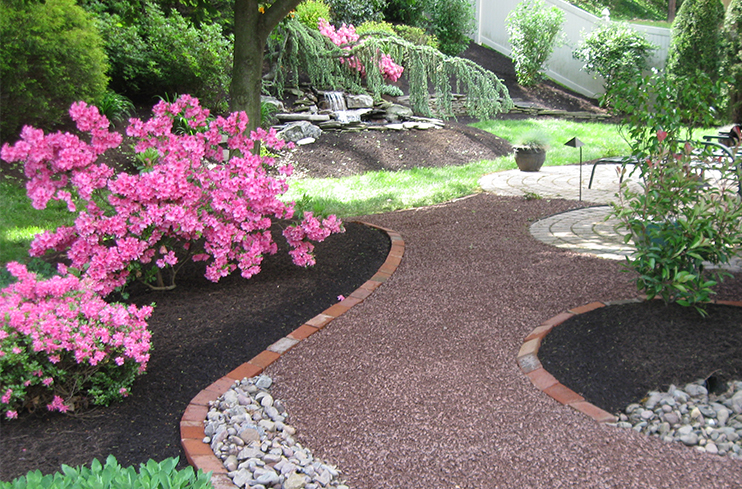
Your yard should be a nice place to relax, not a project you have to work on every weekend. But a lot of homeowners spend hours mowing, trimming, watering, and weeding just to keep their yards looking nice.
The truth is, a well-designed landscape can cut down on the amount of weekly work required to maintain it. By designing smarter landscaping, homeowners can enjoy their yard with less effort.
In Summary
A low-maintenance landscape is designed using local drought-tolerant plants, automated irrigation systems, durable hardscape materials, and strategic layout planning. These features reduce watering, pruning, mowing, and seasonal upkeep while still creating a visually appealing outdoor space that homeowners can enjoy with minimal effort.
What Makes a Landscape Truly Low-Maintenance?
Low-maintenance landscaping means making better design choices from the start. Think about things like the weather, the soil, how plants develop, and how much water they need. This makes sure that your yard works with nature instead of against it.
For example, landscapes that have large lawns often require regular and professional mowing, watering, and fertilizing. Replacing portions of grass with garden beds, decorative stone areas, or patios can significantly reduce weekly work.
Professional designers also look at drainage, sunlight patterns, and how plants mature over time. These details help prevent overcrowding, excessive pruning, and irrigation problems later.
High-Maintenance vs Low-Maintenance Landscaping
A simple design shift can make a significant difference in long-term upkeep.
| Landscape Feature | High Maintenance Option | Low Maintenance Alternative |
| Grass Lawns | Large turf lawn requiring weekly mowing | Groundcovers, ornamental beds, or hardscape |
| Irrigation | Manual watering with hoses | Automated irrigation system |
| Plants | Exotic plants needing constant care | Native or drought-tolerant species |
| Walkways | Gravel needing frequent raking | Pavers, natural stone, or concrete |
Thoughtful material and plant choices reduce ongoing maintenance while keeping the landscape visually appealing.
The Role of Irrigation, Materials, and Plant Selection
One of the biggest contributors to landscape maintenance is watering. Dragging around a heavy watering can or hose a few times each week might make gardening less pleasurable. With irrigation systems, your plants get the right amount of water with little effort. It sends water directly to the plants that need it, which cuts down on overwatering and water loss due to evaporation.
Choosing the best plants for your yard is also very important. Native plants require less watering, pruning, and fertilizing than non-native plants. These plants also tend to have fewer problems like pests or inadequate soil nutrients, which saves you money on that investment.
Hardscaping elements like patios and walkways reduce the amount of lawn you need to mow. In addition, they can help limit plant growth so weeds can’t grow as easily and are easier to locate.
You can also plan for minimum maintenance when you construct lighting and water features. If they are installed correctly, they will stay useful and appealing with little care.
Expert Advice from a Landscape Professional
“A lot of homeowners assume low-maintenance landscaping means giving up beauty or creativity,” says Pete, owner of Diebolt Landscape Design. “But with the right design approach, you can actually create a more attractive outdoor space that requires far less work.”
Why Professional Landscape Design Makes a Difference
Before beginning work, a professional landscape design team looks at your whole site. They look at the soil, the drainage, the sunlight, the irrigation needs, and how the landscape will change over time. This helps keep you from making expensive mistakes and cuts down on the number of times you have to redesign or fix things later.
And for homeowners who prefer to leave the maintenance to professionals, seasonal landscaping services handle tasks like spring cleanup, pruning, mowing, and fall preparation so you don’t have to.
Ready for a Landscape That Practically Maintains Itself?
The first step in making a low-maintenance landscaping is to make a good plan. If you’re ready to enjoy your yard instead of maintaining it every weekend, the team at Diebolt Landscape Design can help. From professional landscape design to seasonal maintenance services, we help homeowners create outdoor spaces that look great and require less effort to maintain.
Frequently Asked Questions
What plants require the least maintenance in landscaping?
Native plants and drought-tolerant varieties typically require the least maintenance because they are naturally suited to your climate and soil conditions. Researching plants local to your region or hiring a local landscaper is best to determine what plants you should choose.
Do irrigation systems reduce garden maintenance?
Yes. Automated irrigation systems provide consistent watering and eliminate the need for manual watering, helping plants stay healthy with minimal effort.
Does hardscaping reduce landscape upkeep?
Yes, adding hardscape features reduce the amount of grass lawn you need to mow.
Can a landscaper maintain my yard year-round?
Yes. Many landscaping companies provide seasonal maintenance services including pruning, irrigation maintenance, mulching, and landscape cleanup.